JACOB FREY – MINNEAPOLIS
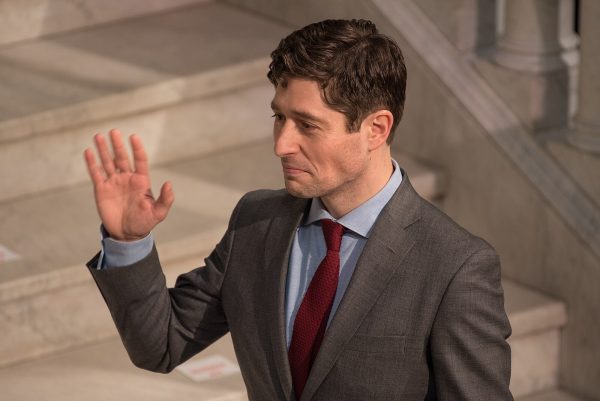
Jacob Lawerence Frey is an American politician and attorney who on November 4th, 2025, was reelected for his third term to serve as Mayor of Minneapolis. Frey was born in Arlington, Virginia and grew up in a suburb outside of Washington D.C. with his Jewish family. Both parents were professional modern ballet dancers, athleticism in his genes, he later received a division one offer for track and field to the College of William and Mary. After he graduated, he went to law school at Villanova University and during his years there he was a notable runner. Participating in the Pan American Games marathon for Team USA which took place in 2007, finishing in fourth place. After this, in 2009 he moved to Minneapolis after graduating summa cum laude from Villanova and joined the law firm Faegre & Benson to practice employment discrimination and civil rights. Frey ran in the 2013 Minneapolis City Council election to represent Ward 3. Receiving the Democratic-Farmer-Labor endorsement and as well from more than 40 elected officials and organizations. Frey defeated Diane Hofstede with more than 60 percent of the votes, serving one term before ultimately becoming Mayor of Minneapolis.
As Minneapolis enters another four years under Frey’s leadership, understanding how he views the responsibilities of his position is essential to understanding his priorities and decision making approach. When asked to describe what the job truly entails, Mayor Frey said, “Being Mayor of Minneapolis means waking up every day feeling the weight—and the privilege—of serving a city that’s bold, compassionate, and constantly pushing itself to be better,” Frey said. “It’s showing up in every neighborhood, hearing people’s stories, and turning those conversations into action.”
Minneapolis continues to face issues related to public safety, housing, and economic inequality, topics central to ongoing community discussions. Asking about the biggest challenges and opportunities helps reveal where the administration expects to focus over the next term. “One of our biggest challenges is also what makes Minneapolis extraordinary: our diversity of experiences and perspectives,” Frey said. He noted that issues such as public safety, housing, and economic inclusion require complex solutions but also create opportunities for collaboration and innovation. “Those same complexities spark creativity and innovation. When we bring people together from different backgrounds and sectors, we get smarter ideas and stronger policies. Minneapolis has world-class talent and heart. The opportunity is in harnessing all of that to make progress that reaches every neighborhood.”
Young people make up a significant portion of Minneapolis residents and are directly affected by long-term city decisions. Understanding why youth perspectives matter provides insight into how the city plans to incorporate younger voices in policy discussions. “Young people aren’t just the future—they’re shaping the city right now,” Frey said. “They bring honesty, urgency, and big-thinking energy that we need at the table.”
Many young residents are increasingly active in civic engagement, community organizing, and local policy issues. Asking Frey what advice he has for them helps inform students and emerging leaders how they can contribute effectively. “Believe in your voice. You don’t need a title to lead—you just need to show up and care,” he said. “Leadership is action… Don’t wait for the perfect moment or for someone else to go first.”
Understanding what shaped Frey’s approach to leadership gives context to the policies he champions today. His past work helps explain his administration’s ongoing focus on housing stability and youth support. “Early on, I worked on affordable housing issues, and it opened my eyes fast,” he said. He added that those experiences informed later initiatives, including Stable Homes Stable Schools, which has assisted more than 6,700 Minneapolis students and their families.
As Minneapolis prepares for another term of leadership and looks forward toward new elections, the Mayor’s message to young residents underscores the continued importance of civic participation, especially among first time voters and upcoming voters. “Your ideas, your votes, and your voice matter,” Frey said. “Stay engaged. Push us to be better… Every time you speak up or show up, you’re helping build the Minneapolis you want to live in.”
ZOHRAN MAMDANI – NEW YORK
Born in Uganda and raised in Queens, Zohran Mamdani is the current mayor-elect of New York City. An ethnic Indian but born in Uganda, Mamdani comes from a family with ambitions. With his mother being a nominated filmmaker, and his father an anthropology professor at Columbia University. Mamdani co-founded his school’s cricket club at Bronx High School of Science, and in 2010, Mamdani also co-founded a “Students for Justice in Palestine club” at Bowdoin College, where he graduated with a bachelor’s degree in Africana studies. This was his first step to getting politically involved, combined with the Palestinian and Israeli conflict made a formative experience for Mamdani. Post-college, he worked on his mother’s films and formed a hip-hop name for himself, that being “Young Cardomom”. What pushed Mamdani into the modern political scene was his job as a Prevention counselor and his work on a political campaign. After serving once as a New York State assembly member representing Astoria, he was reelected a second time. Affiliated with the Democratic Socialists of America, his legislative achievements include a program to make a small number of NYC buses free for a year. Following his 2024 campaign, the 2025 democratic primary was far more successful, with Mamdani taking 56% compared to his rival, Andrew Cuomo, at 44%. As the current Mayor-elect, Mamdani has been previously endorsed by Bernie Sanders and Kamala Harris. When Mamdani takes his seat on January 1 , he will be the First Indian and Muslim mayor of New York.
Aside from his unique cultural background, what made Zohran Mamdani a revolutionary leader was his trailblazing campaign, which resulted in him having the highest turnout of the youngest voters in the New York City mayoral election. As stated by The City,” The number of voters casting ballots in the tense three-way race for mayor between Zohran Mamdani, Andrew Cuomo and Curtis Sliwa broke records, with more than 2 million check-ins.”
Combining his charisma, excellent media team, and relatable down-to-earth background, Mamdani’s history of activism offers proof of his principles. This was most evident in his unwavering support for the labor movements, like the taxi driver strikes.
According to Mother Jones, Mamdani said, “I will be on strike for as long as it takes.”
This quote is a testament of solidarity. In 2021, Mamdani, when he was serving as an assemblyman, went on a 15-day food strike with local New York taxi drivers to get debt relief for them. A local taxi driver, Richard Chow’s brother, ended his life after accumulating 750,000 dollars in debt after buying a super taxi license or taxi “medallion.” After the strike, the Mayor of NYC capped the debt at 170,000, aiding in the debt relief. In the case of Mamdani, for voters wary of empty talk, this was previous proof of his proven credibility, which became a main reason for many young voters to believe in him.
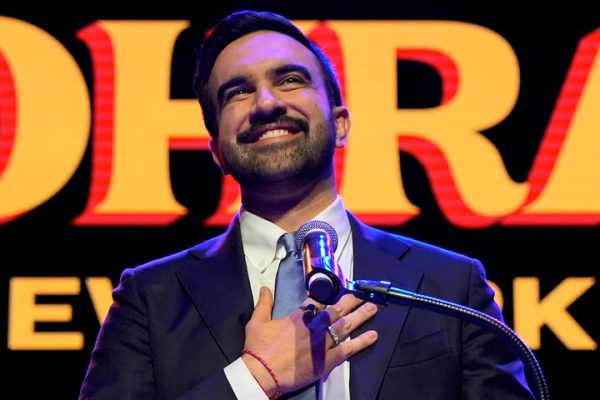
His excellent communications team, paired with his authenticity, executed a philosophy of meeting voters where they were both physically and culturally. This meant tailoring the campaign’s presence to the daily lives of its constituents in a way that felt personal. As reported by Forbes, “Zohran Mamdani’s campaign tapped into Gen-Z’s desire for community. Mamdani actively engaged with different communities from across the five boroughs. He’s been dancing Salsa, performing Tai Chi, talking with taxi drivers, meeting a bodega cat in the Bronx, eating biryani, and turning up at a nightclub in Bushwick.”This approach transformed the way people advertise in the modern era from the traditional broad blast to Millions of viewers, into Mamdani’s team transforming it into a series of niche-targeted conversations, making his presence feel familiar and genuine rather than corporate.
His Relatable cultural background with New Yorkers. As an ethnically Indian Shia muslim, Zohran uses his personal diverse cultural background to his advantage by appealing to ethnically diverse backgrounds in New York. The Conversation states,” he switched between Arabic, Bangla, English, Hindi, Luganda, Spanish and Urdu to connect with diverse communities.”Mamdani uses his multilingualism as a practical tool for voter engagement. By speaking people’s native languages, he bridges divides, connecting with the diverse cultural demographic of 200 different languages of New York City, a bit closer than before.
In his victory speech, Mamdani declares, “Tonight, against all odds, we have grasped it. The future is in our hands. My friends, we have toppled a political dynasty.
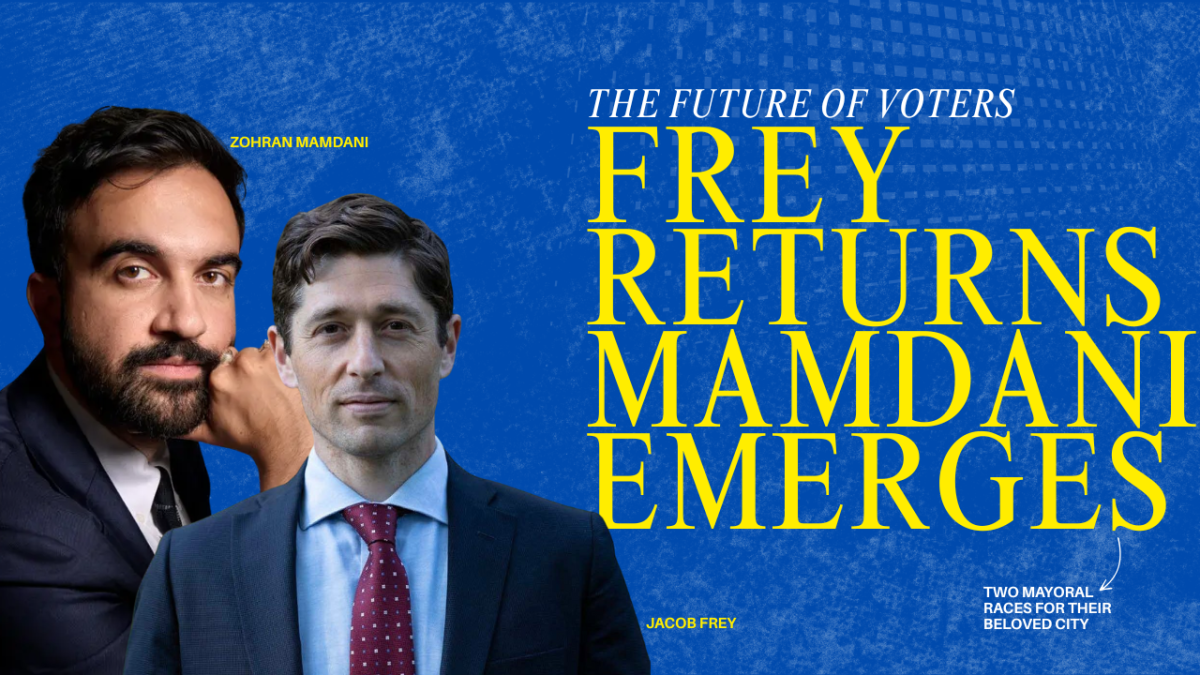
In reality, Jacob Frey represents liberal governance as management, focusing on incremental progress. Zohran Mamdani’s campaign embodies a sudden movement driven by an agenda that seems to redefine what is politically possible. Together, they illustrate the difference between experience and outreach to their communities that is currently defining the future of Urban Democratic politics.