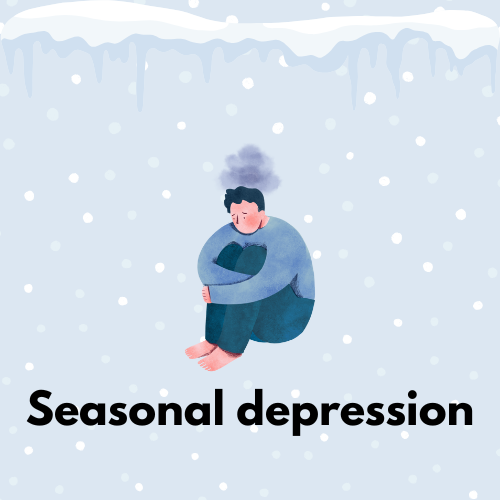
Seasonal Affective Disorder (SAD) is a type of depression that mostly blooms during fall/winter seasons due to the lack of sunlight and getting darker earlier in the evening. The term “winter blues” comes from most people feeling this in the winter season when truly, this depression can come during any season change.
U.S Centers For Disease Control and Prevention mentions that seasonal depression affects 36.4% – 41.5% of early adults between the ages of 18 – 29. Seasonal Depression affects everyone, the average depression severity score increased 14.8% from August 19–31, 2020, to December 9–21, 2020. Junior Topaz Tamiez said, “I feel like I work slower during the winter season and feel more tired, work is harder to get done.”
These percentages show that seasonal depression is very serious and this needs to be covered with more importance and care to the topic. People may treat seasonal depression as just the “winter blues” or “that season” when in reality, people will wait until the warmer seasons to act upon their negative thoughts, feeling like they have more energy to do so.
This shows the severity of seasonal depression. People will get so caught up in their heads and feel so down that they will wait until the warmer seasons to gain their energy back so it allows them to act on their suicidal thoughts. English teacher, Mr. Jeremy Wood said, “I can definitely see it affecting students here at OHS, kids are less motivated to complete assignments and often keep their heads down.
Some symptoms of seasonal depression are: low energy, sadness, craving carbs, oversleeping, social withdrawal and loss of interest in hobbies. Usually this happens because there is less sunlight to fuel the body, less Vitamin D being produced. The usual span for SAD can last up to four to five months at a time, making the body and mind exhausted.
Seasonal depression is more than just a season-changing depression. SAD affects over 5% (17 million) of Americans, as stated by Mental Health America and it is very serious because it can affect anyone, not only those with pre-existing depression.