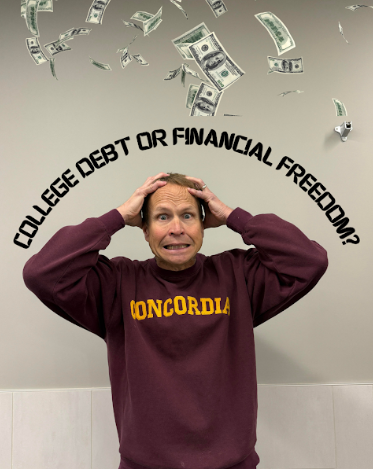
For many seniors at Owatonna High School, graduation is a major milestone, but it also comes with an overwhelming set of decisions about the future. One of the biggest questions students face today is whether pursuing a college education is worth the long-term financial burden that often comes with it.
College has long been viewed as the “next step” after high school and a pathway to success, stability, and better career opportunities. However, rising tuition costs and increasing student loan debt have led many students to rethink that traditional path. Instead of only focusing on what career they want, students are now also considering how much debt they are willing to take on to get there.
According to national data, student loan debt in the United States affects millions of people and continues to grow each year. Many graduates leave college not only with a degree, but also with years, sometimes decades, of monthly payments ahead of them. This financial pressure can delay major life goals such as buying a home, moving out independently, traveling, or building savings.
Some students feel this reality changes how they view college completely.
“Thinking about paying for college is honestly overwhelming,” said Amelia Baldwin, a senior at Owatonna High School. “It feels like you’re choosing between your future career and being in debt for a long time. That’s a really hard decision at this age.”
Others believe the pressure is pushing students to explore more options than ever before, including community college, trade schools, apprenticeships, or entering the workforce right after high school.
Teachers also notice that students are becoming more cautious and intentional when planning their futures.
Mr. Leer, a teacher at OHS said, “I was lucky to get through college with a small amount of debt due to grants and scholarships. Any loan payment is not fun, but today’s students are faced with SO much more debt than we had to deal with.”
Still, many argue that college remains one of the most reliable paths to higher-paying careers. Fields such as medicine, engineering, law, and education still require degrees, and supporters say that the long-term benefits often outweigh the short-term cost. They point out that a college education can increase job opportunities, earning potential, and career flexibility.
However, critics of rising tuition say that the system itself is part of the problem. They argue that college has become so expensive that it is no longer accessible or fair for many students, especially those from low-income families. As a result, financial freedom after graduation feels less like a guarantee and more like a privilege.
The debate between college debt and financial freedom continues to grow across the country as students rethink what success looks like. For today’s seniors, the decision is no longer just about choosing a major or a school, it is about deciding what kind of life they want after graduation and how much they are willing to sacrifice to get there.